Familjen Larsen's Reseblogg

Around the world with us!

All posts by Jörgen

En efterlängtad runda

Äntligen tog Ellie och jag oss i kragen och begav oss ut på en promenadrunda.

Ellie blev hämtad av Tina, så hon var hemma hos oss vid 11:50. Vi två begav oss ut ganska omgående och hade bestämt oss för att ta 5km Elinelundsrundan.

Det var ganska kallt, lite snöigt här och där och lite halt på sina ställen.

Ellie tyckte att vi kunde ta en liten avstickare mot Djupadal, vilket vi gjorde. Så rundan blev lite längre.

Efter avslutad runda, fick vi vårt åttonde vykort.

Dessutom fick vi två nya collectible kort.

Klar med Conquer 2025

Så – Jag hade satt en sträcka på 2 500 km för hela 2025.

Startade den första januari och beräknade vara klar den trettioförsta december. Det blev inte riktigt så! Jag blev klar redan den sjunde november, förmodligen för att jag tidigare i år sprungit en hel del.

Detta innebär att jag avverkat drygt 8 km per dag.

Ellie & Jag på en höstrunda

Idag tog Ellie och jag oss på en promenad igenom Kroksbäck, för att sedan vika av mot Rosenvång och Limhamn, genom Elinelund och sedan hemåt.

Vädret var grått, lite blåsigt på sina ställen och något kallt.

Efter denna runda, fick vi vårt 8:e collectible card. Vi fick dessutom reda på, att vi passerat 80% av den totala sträckan och att ännu ett träd planterats.

Milestone Treeplant

En solig söndagsrunda

Idag kom Ellie på besök, för att gå ut och gå en längre runda. Pontus skulle egentligen ha sprungit Malmö Marathon, men hoppade över det, då han inte kunnat träna p.g.a. sjukdom.

Så, Ellie och jag fick villigt med oss Tina, på dagens vandring, som gick via Emporia, runt om Elinelund och sedan inom Konsum, för att till sist ta oss hemåt.

Det blev en lagom lång runda i solen!

Färdig med Space Stations!

Under morgonen kom det sista vykortet från utmaningen Space Stations. Det åttonde i ordningen!
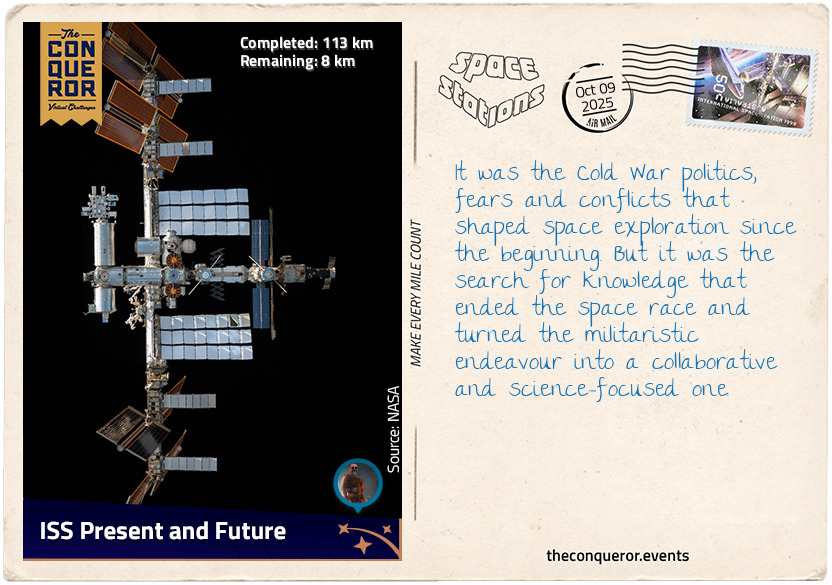
Nowadays, there is little talk about launch infrastructure when it comes to space travel and a lot more about getting to the Moon or even Mars. The work jointly conducted aboard the International Space Station by America, Russia, and the 10+ other nations is pivotal in achieving such lofty goals. But more than that, the instruments pointed down to Earth are vital and will become more so for the preservation of our only home in the universe. 


From systems that detect drought and predict wildfires, to programs that develop new drugs and technologies that can offer us a better life, the ISS offers the world valuable tools for a better life on Earth. Experiments regarding human and plant life in space might offer us a good life on some other planet. 


Since its first crewed mission in 2000, the ISS has welcomed more than 70 others, with astronauts from all over the world. There is an echo to the Space Race era and the Red Scare, however. Legislation put in place by the US practically bans China from participating in the ISS. The International Space Station shared Earth’s orbit for a brief period of time with Mir, but for 20 years, no other permanently occupied spacecraft orbited Earth. In 2021, the Chinese Manned Space Agency sent Tiangong (which translates as “Heavenly Palace”) into space and began a permanent presence in space. 


If this is a sign of yet another space rivalry or the beginning of an orbit full of space stations conducting research and sharing data for the betterment of all living on Earth, it remains to be seen. 


ISS’s operational life ends in 2030, and plans for its controlled deorbiting are already in place. Mir overstayed in orbit by 10 years, and Voyager probes are still hurtling through space, so I foster a secret hope that the International Space Station might remain in space a while longer. 


For now, however, the International Space Station still orbits the Earth around 16 times a day, every day. Due to its size, it can be spotted with the naked eye, and NASA has a few tips on how to do it, which I’ll leave with you here. While you look up and your eyes narrow on the little light crossing the skies of your nation, try to remember that you are looking at the result of decades of space rivalry and cooperation. The ISS symbolises the tremendous achievements gained from international collaboration and goodwill. Since we had eyes to see, we trained them on the stars and longed to touch them. This will probably remain true in the future, so while you follow the ISS, try keeping in mind that it is not only the past you’re looking at, but also the very beginning of our future in space. 

Senare på morgonkvisten, ganska exakt kl. 09:28, så passerade även jag mållinjen i Space Stations!
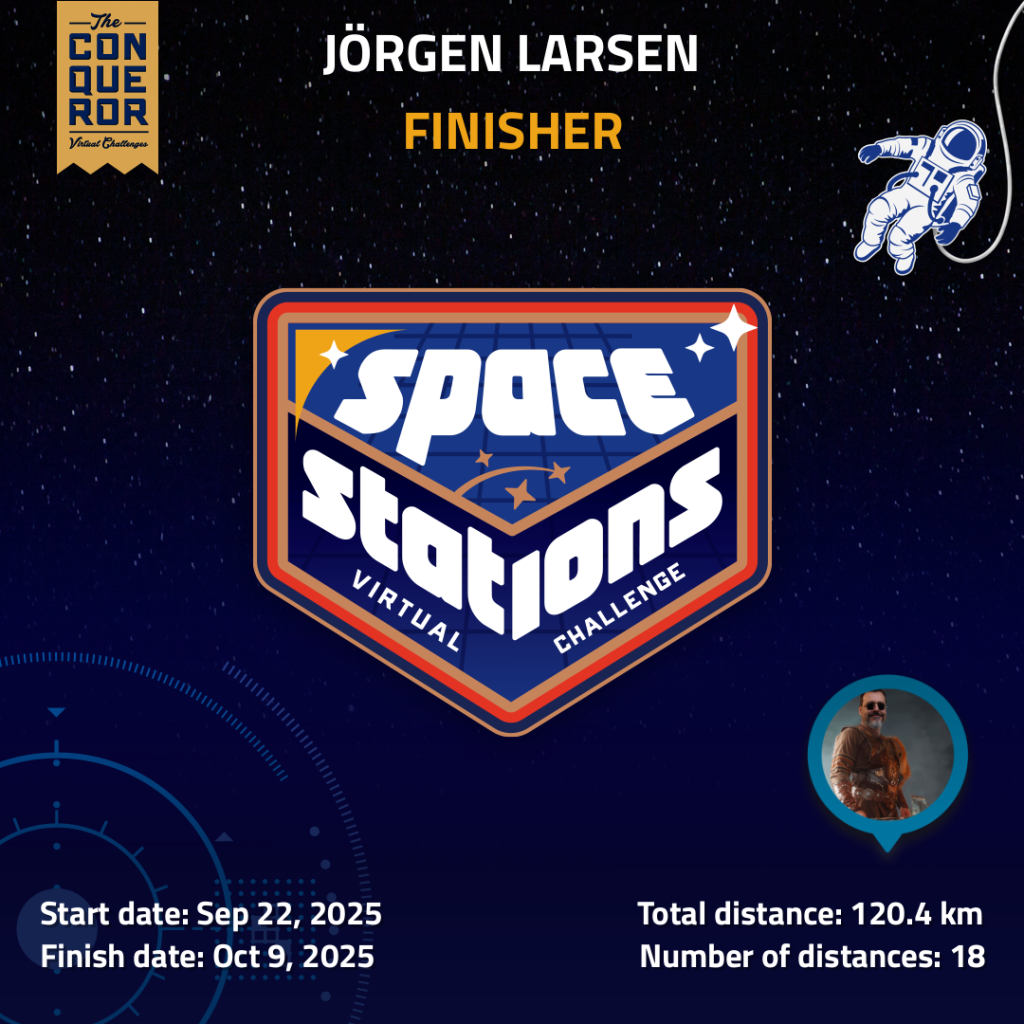
Därmed var Gabriel och jag båda klara med våra tre utmaningar i serien Space Race!
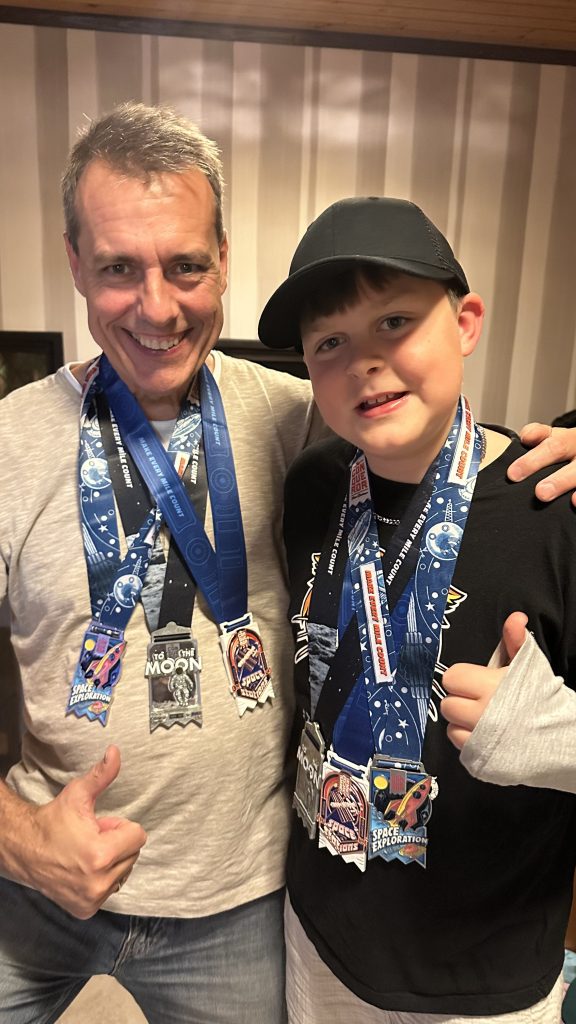
Gabriel klar med Space Stations!

Idag gick Gabriel i mål i vår tredje utmaning i the Conqueror Events utmaning Space Race. Denna sista utmaning ”Space Stations” var på 120,4 km, vilka Gabriel klarade av på 16-dagar, vilket ger honom ett snitt av ca: 7,5 km/dag. Själv ligger jag ca: 2-dagar efter just nu!

Idag kom även min medalj för vår förra utmaning ”To the Moon”.

Sjunde vykortet i Space Stations

I natt kom det sjunde vykortet från Gabriels och min utmaning Space Stations. Gabriel gick om mig och ligger ca: 2km före just nu!

On 20th of November 1998, the US-funded and Russian-built module named Zarya launches from Kazakhstan. This component is the first building block of the International Space Station, and its name, meaning “sunrise”, is chosen to symbolise a new dawn in collaborative space exploration.


Zarya is joined in December of the same year by the Unity Module, carried into orbit by Space Shuttle Endeavour. The now connected Russian and American modules form the core of the ISS, and although they are less important for the station’s functioning now, they remain part of it today.


On 2nd of November 2000, the ISS is finally ready to welcome its first human inhabitants. Space veterans Bill Shepherd, Yuri Gidzenko and Sergei Krikalev become the first astronauts to visit it and to initiate the uninterrupted human occupation of the station. The three men spend 136 days aboard the station and activate various systems, unload equipment and experiments from uncrewed Russian spacecraft and host two visiting Shuttle missions.


Over the years, the International Space Station has welcomed 6 more Russian modules and 8 American ones. What makes the station truly international, however, is the hardware contribution from space agencies from Europe, Japan and Canada and the access to astronauts from over 20 nations. As the habitable area grows, so do the scientific capabilities of the station, making it a unique and invaluable space for conducting research in a variety of fields.


Until the present day, over 3000 experiments are conducted aboard the ISS, some of them expand our understanding of subjects researched since the first space station, such as the effects of microgravity on the human body, the growth of plants in space and Earth monitoring. Experiments regarding muscle and bone loss not only improve the health of astronauts, but are now used to understand and combat the effects of osteoporosis in people back on Earth. Since the puny harvests of Super-Dwarf wheat on Mir, scientists have managed to grow a variety of plants onboard ISS, such as three types of lettuce, red Russian kale, zinnia flowers and chilli peppers.

Samtidigt kom det besked om att vi passerat 60% av den totala sträckan och att ännu ett träd blivit planterat!

Milestone Treeplant