Familjen Larsen's Reseblogg

Around the world with us!

All posts by Jörgen

Midnattsloppet 2025 avklarat

Vi samlades hemma hos Pontus & Elvira i Svedala, för middag. Därifrån körde Elvira och Ellie oss in till stan, där vi skulle starta kl. 21:12 i grupp 5a. Denna grupp hade en löptid på 60:00-64:59 minuter.

Vädret var OK och stämningen var på topp. Tog det ganska lugnt i början, men ökade lite efter ett tag, när jag fick känningar i höften. Det blev inte värre under loppet och till slut var jag i mål! Pontus en stund innan mig.

Första vykortet i To the Moon

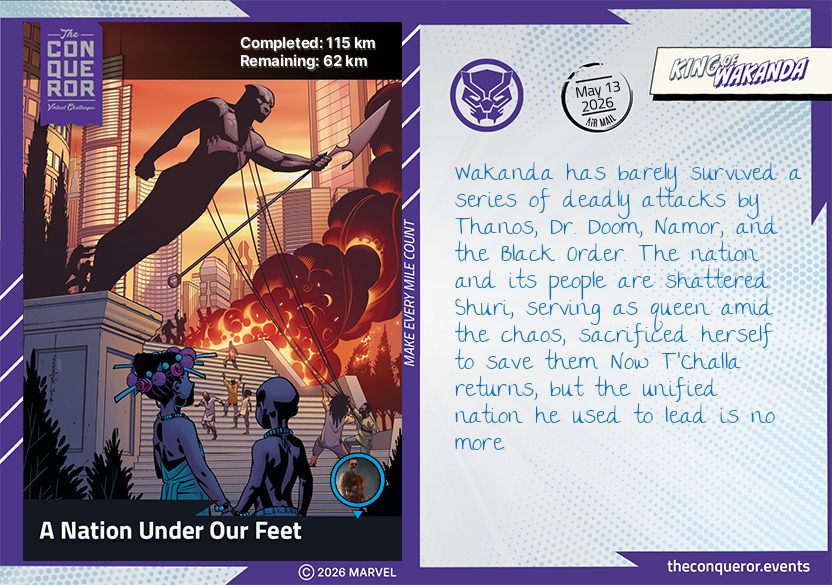
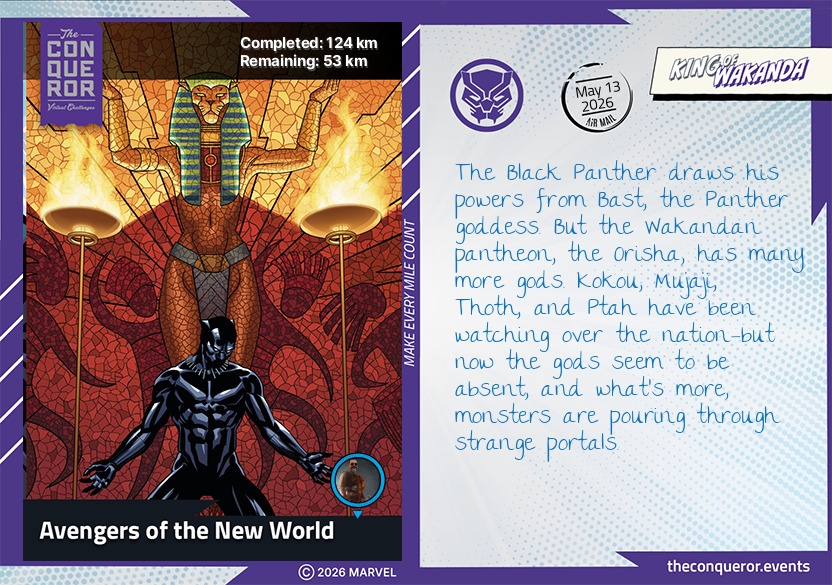
Redan efter första dagens steg, fick vi vårt första vykort.

JFK’s speech is greeted with great acclaim in the press. It is an inspiring and hopeful message that expresses all the best intentions and goals of space exploration. It’s worth reproducing some of it in full, as it speaks for itself:

“I do say that space can be explored and mastered without feeding the fires of war, without repeating the mistakes that man has made in extending his writ around this globe of ours. There is no strife, no prejudice, no national conflict in outer space as yet. Its hazards are hostile to us all. Its conquest deserves the best of all mankind, and its opportunity for peaceful cooperation may never come again. But why, some say, the Moon? Why choose this as our goal? And they may well ask, why climb the highest mountain? Why, 35 years ago, fly the Atlantic? Why does Rice play Texas? We choose to go to the Moon. We choose to go to the Moon… We choose to go to the Moon in this decade and do the other things, not because they are easy, but because they are hard; because that goal will serve to organize and measure the best of our energies and skills, because that challenge is one that we are willing to accept, one we are unwilling to postpone, and one we intend to win, and the others, too”.

Exploration for exploration’s sake, scientific advancement not in the pursuit of power or dominance, but to discover and explore the universe. It is a speech that recognises that unique and noble impulse of humans – to leave comforts, prejudices and preconceptions behind and, in the name of curiosity, explore the unknown. Kennedy, in even stronger terms than Eisenhower in his 1958 speech, establishes a vision for a Space Race that moves further from its military origins.


Of course, not everyone is energised by this rousing paean to science and progress. The American political right dismisses the idea out of hand. Former President Dwight Eisenhower, worried as usual about the nation’s purse strings, calls the idea of spending all these tax dollars on going to the Moon ‘nuts’, and Senator Barry Goldwater, Kennedy’s Republican rival, criticises the prioritisation of a civilian space programme, claiming it would leave the US vulnerable to the still-mounting Soviet military advances.


Yet Kennedy’s speech comes in a time of national (and for the President, likely personal) self-doubt. The Soviets seem to be miles ahead in space-faring technology, having beaten the Americans in almost every endeavour, from satellites to Lunar exploration to space flight. Worse, a year prior, the Bay of Pigs fiasco, when the Soviet-aligned revolutionary government in Cuba repelled a secret US-backed invasion, caused a grave national humiliation. The US at the time needed a reason to believe in itself. Kennedy does this by appealing to the best of American self-conceptions, the nation’s idea of itself as a pioneering people, as innovators and dreamers, boundary-pushers and trailblazers. Americans, as freedom lovers, are not compelled to go to space by a totalitarian government, nor are they forced into the endeavour by the need to compete with a powerful rival – no, they choose to go to the Moon for the sake of their own curiosity, their own humanity.

Klar med Space Exploration

Det tog bara sexton dagar att slutföra denna utmaning, med Gabriel tätt i hälarna.

Inväntar bara att han också skall gå i mål, sedan startar vi nästa utmaning i ordningen: ”To the Moon”.

Vykort från Space Exploration

That man is named Yuri Gagarin. The son of a garment maker and a dairy farmer in rural Russia, Gagarin proved his mettle and courage even as a young boy. When the Germans invaded his country in WW2, they occupied his house and terrorised his neighbours. After one particularly brutal Nazi officer attempted to murder his brother, Yuri began sabotaging the enemy’s tanks by pouring soil into their batteries. This was an incredibly dangerous endeavour, and Gagarin was risking a fate worse than death if he were caught. Then, when the Germans were finally driven out of his village, he helped the Red Army clear deadly minefields left behind by the fleeing Nazis, potentially saving the lives of hundreds of unaware farmers.


After the war, Gagarin was finally able to pursue his education. He was taught in an ad hoc school by a volunteer teacher. He quickly proved himself a gifted student and was especially fond of maths and science. After graduating from school, he began an apprenticeship at a steel plant near Moscow, completing a university course in the evenings. Then, when studying tractors at a vocational college nearby, he volunteered at a local flying club, where he was eventually recruited to join the air force. Here he proved himself highly capable, and, after expressing interest in the Luna III project, was selected to join the Soviet Space Programme. 


Gagarin’s biography is a great propaganda boon for the Soviet Union. Here is a working-class man who would have, like so many millions of others, toiled away his life, his talents lost in the obscurity of Russia’s vast countryside. To the Soviets, he is typecast as the perfect representation of the ‘new man’, a member of the working class, tough, honourable and brave who, through his intelligence, skill, and, of course, loyalty to the state and the principles of Marxism-Leninism, can achieve goals beyond the wildest dreams of his pre-revolutionary parents. This carefully sculpted icon of Gagarin is broadcast to both the citizens at home, to give them pride in the success of their society, and the working class abroad, who may one day choose to follow in the footsteps of the Soviet Union.


It is April 12th,1961. In the Baikonur Cosmodrome, Kazakhstan SSR, the Vostok 1 rocket prepares for launch. This is the moment that Yuri’s life has been leading up to. At just 27 years old, he is to be, god willing, the first man in space. He pauses for a moment to urinate on the wheel of the bus bringing him to the launch site (starting a tradition among Russian cosmonauts that persists to this day), and then straps himself in. He smiles and speaks the command:

“Poyekhali!”, or “Off we go!”

At 06:07, the ground shakes as the rocket launches. 1,100,000 pounds-force of thrust send Yuri to the heavens at speeds exceeding 17,000 mph (27,400 km/h). After just 10 minutes of flight time, Yuri is in orbit. Like the Roman sun god Helios in his chariot, he traces a blazing comet around our planet for 108 minutes, girdling it once. Whilst in space, he makes a simple and profound transmission back home:

“I see Earth! It is beautiful!”


Then, as Vostok 1 passes over Africa, he begins his descent. A few minutes later, Yuri ejects from his capsule and parachutes down, becoming, as he lands home safe in Russia, the first man to fly to space and come back down again.

9:e vykortet kom idag!

Efter att ha varit ute på mitt ”Långpass” i min träning inför Midnattsloppet, kom det ett vykort från Space Exploration. Det var ett tufft pass, där jag på något sätt skadade min höft på höger sida. Fick halta hem från Djupadalskolan och kunde knappt stödja på benet!

Just a few months after NASA’s formation, the USA announces Project Mercury, which aims to send a human being into space. In the USA, a new term is coined – astronaut, a traveller of the stars. The project is named after the Roman god Mercury, the god of travellers and messengers.


In the USSR, the Vostok programme begins, aiming for the same goal as the Americans – to put a person into space. Here, another new term is coined – cosmonaut, a traveller of the cosmos.


Korolev leads the design of the state-of-the-art Vostok. It is equipped with all the life support systems necessary to keep someone alive beyond our atmosphere: an ejector seat in case of emergency, a heat shield for re-entry, and a remote control system so that the mission can be guided from ground control. Finally, the theoretical cosmonaut will be equipped with a parachute, so that as they land, they can eject and splash down safely.

In 1960, the Soviets manage to send a dog up into the heavens, and then happily back down just in time for dinner and a long nap, proving that Earth organisms can survive in space. Belka and Strelka spend 24 hours orbiting the Earth and return home with their tails wagging. A year later, when Strelka has a litter of puppies, one of them, named Pushinka (meaning ‘fluffy’ in Russian), is given to President John F. Kennedy as a gift.


Following the pawprints of the first brave canine cosmonauts, the Soviet Union is now mere months away from becoming the first civilisation in world history to breach the barrier of space and ascend beyond our little blue world.

Space Exploration dubbla igen!

Even so, clamouring among press, people, and politicians, and a pervading sense of national humiliation and paranoia in the country, make it impossible to brush the problem away.

The Americans are immediately jolted out of complacency and into action. In October 1958, responsibility for space exploration and research is taken from the military and given instead to a newly created civilian federal department –  the National Aeronautics and Space Administration, better known as NASA. This is the first step in the slow evolution of the Space Race out of the narrow confines of the Arms Race. NASA, as a civilian institution, claims that its primary aims are scientific research, technological advancement and the exploration of space.


Eisenhower has, to a small extent, demilitarised the Space Race. He now asks the Soviets to compete on new terms. Will they meet the new Space Race? Where the superiority of capitalism or communism is not proven by how powerful one side’s weapons are, but by how capable the system is of mobilising its citizens’ talents and marshalling its resources, of educating scientists and engineers who can push the boundaries of human knowledge, and of capturing the hearts and imaginations of the postcolonial states who are attempting to decide their own political trajectories. 

The Soviets are firm in the belief that a society that has overthrown capitalism and is working towards building communism has advanced socially, culturally, politically and morally beyond any capitalist society. For the ideologues in the CPSU, there is no better way to prove this principle than to push the frontiers of human knowledge and surpass the far richer Capitalist West in technological achievement. By developing technologically, they aim to place themselves ahead of the Americans as the superpower that will trailblaze our planet’s future.

Still, the Cold War persists, and both sides continue to research the military applications of space travel. In 1960, the Soviets begin the Zenit project, which aims to use satellite technology to spy on the Americans. For their part, the USA has surrounded the USSR with military bases, many of them nuclear armed, and continuously sends out its U2 spyplanes, which can fly over 70,000 ft in the air, far above the altitudes that the Soviet radar and jets could reach, over Russia. 


NASA’s creation opens a new chapter in the Space Race. Now there are new stakes, new priorities and new aims. From the bitter and paranoid years of the arms race, a more good-natured competition arises with exploration as the purported aim of the development of space technology.

On 2nd January 1959, Luna I is launched. The aim is for the craft to make contact with the Moon and deposit on its surface two pennants bearing the hammer and sickle, the international symbol of communism. It is equipped with an array of sensors intended to measure the pressure both inside and outside the spacecraft, the radiation of cosmic rays, and the magnetic fields of both the Earth and the Moon.


Luna I launched, reaching speeds of over 25,000 miles per hour. As it nears its target, its guidance system fails, and it passes by, missing the Moon by over 3,725 miles (5,995 km). Still, it is fast and powerful enough to break free of Earth’s orbit, and it flies through open space before being caught by the gravity of the Sun, and pulled into a heliocentric orbit, where it still is today.


The project is, on paper, a failure, but at the same time, a resounding success, becoming the first object from our planet to escape Earth’s gravity. Soviet propagandists immediately get to work. The project is quickly given the nickname ‘Mechta’, meaning ‘dream’ in Russian, and they begin to refer to Luna I as the world’s first ‘Cosmic Ship’. And so, the world sees it, communism has produced the first spaceship, seven years before the USS Enterprise is launched on American television screens.

Eight months later, Luna II is launched with the same aim. This is actually the sixth Soviet probe aimed at making contact with the Moon; the four failed attempts preceding Luna I are kept as a state secret. Sixth time’s a charm, and Luna II successfully reaches the surface of the Moon. 

Then Luna III is launched. This craft is tasked with orbiting the Moon itself and collecting photographs of the dark side of the Moon, the side of the satellite that always faces away from the Earth. The success of this mission means that for the first time, humans see the other side of our Earth’s satellite. The Soviets, on grainy but still detailed black and white film, manage to photograph around 70% of the dark side of the Moon’s surface.


Throughout history, humans have wondered about the Moon. The Sumerians believed it was the god Nanna, father of the Sun. To the ancient Greeks, it was the chariot of the goddess Selene, and its perfect silver light came from the shining pelts of her two snow white horses. And, even as the Soviets brushed our satellite with their fingertips, many people across the world believed that the Moon was the cause of madness, or told stories about its strange ethereal light transforming men into wolves. Now, for the first time in human history, its secrets are almost within reach.